IIoT systems connect physical equipment with digital technologies, including artificial intelligence (AI) machine learning, and data analytics, to improve industrial automation and operational efficiency. These connected environments rely on four key pillars:
- Sensors and Devices: Collect real-time information from industrial equipment, machinery, and environmental conditions.
- Connectivity: Transmits collected data between sensors, devices, machines, and centralized systems through wired or wireless networks.
- Data Processing: Analyzes incoming data using computing platforms, AI, machine learning, and analytics to identify patterns, monitor performance, and support predictive maintenance.
- User Interface: Presents processed information through dashboards, monitoring platforms, and control systems, allowing operators to monitor equipment and make data-driven decisions.
Together, these four pillars enable smarter industrial operations, supporting applications such as automated manufacturing, remote monitoring, predictive maintenance, logistics management, and equipment optimization. By integrating physical and digital systems, IIoT helps industries improve productivity, reduce downtime, and respond more efficiently to changing operational demands.
Why Frequency Control Matters in IIoT Systems
Industrial automation systems require high-precision and extremely reliable components to ensure dependable operation in demanding environments. Crystals and oscillators are essential in smart industrial applications, IoT and industrial automation systems because they provide precise time and frequency control that is vital for the synchronization, communication, and operation of electronic systems. Aker’s crystals and oscillators are designed to meet the requirements of these systems and are widely used in:
Automated Production Lines
Deliver stable clock signals for precise control of robotic arms and production machinery.
Data Collection and Processing
Assist businesses in collecting sensor data for real-time processing and optimizing decision-making processes.
Energy Management and Traffic Control
Support the stable operation of smart grids and smart city infrastructures.
Aker’s IIoT Solutions: High-Performance Frequency Control Components
Aker’s quartz crystals and oscillators are indispensable in IoT and industrial applications, featuring:
Durability
Operates reliably in challenging conditions such as extreme pressure, temperature, humidity and vibration.
Reliability
Ensures long-term operation without failure.
Compatibility
Integrates seamlessly with other devices or systems to avoid compatibility issues.
Ease of Maintenance
Simplified design for convenient repairs and upgrades.
Remote Monitoring
Supports remote communication, software integration, and security measures for real-time status monitoring.
IIoT Application Solutions for Connected Industries
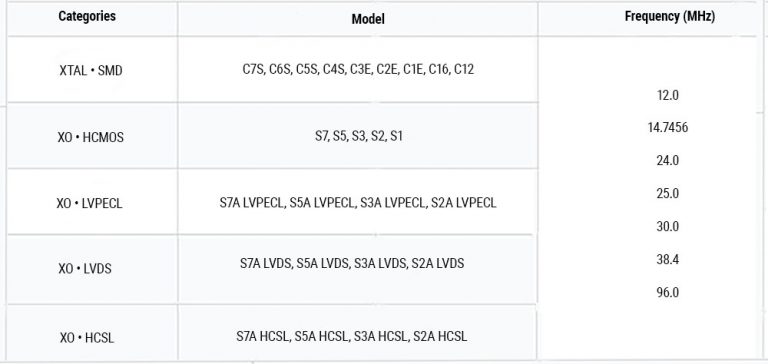
Aker offers a wide range of product models tailored to various frequency needs. They are designed specifically for industrial automation and IoT applications, including: