
Automatic Identification and Data Capture (AIDC) technologies have become essential across retail, logistics, healthcare, manufacturing, finance, and transportation. Whether scanning a barcode at a supermarket checkout, tracking inventory in a warehouse, or verifying products on a production line, every AIDC device depends on one critical component—a stable timing source.
Crystal resonators (XTALs) and crystal oscillators (XOs) provide the precise clock signals required for barcode scanners, QR code readers, Radio Frequency Identification (RFID) systems, Optical Character Recognition (OCR) devices, and machine vision equipment. Stable timing ensures fast decoding, reliable data transmission, and consistent system performance.
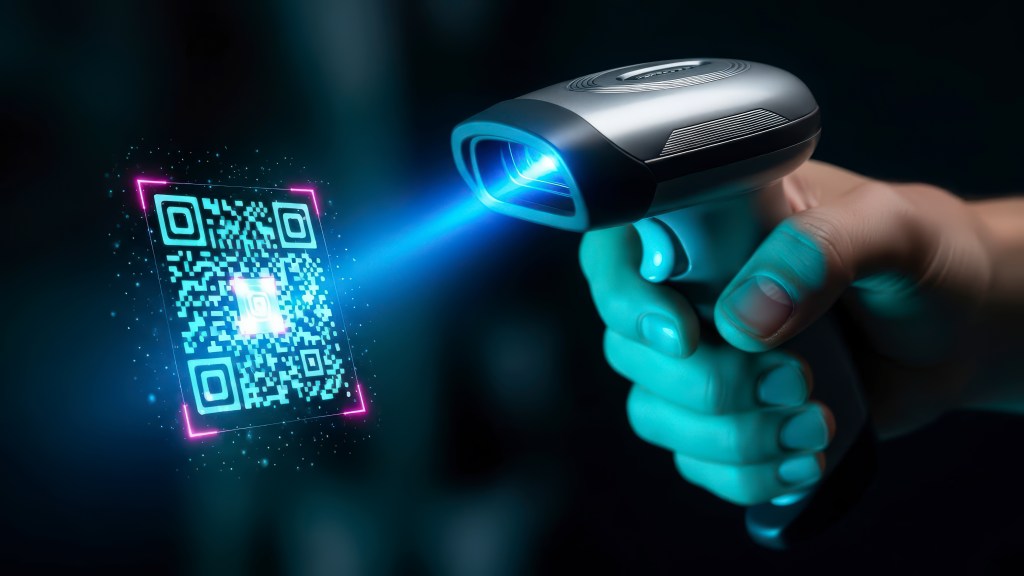
Automatic Identification and Data Capture (AIDC) refers to technologies that automatically identify objects and collect data without manual input. By reducing human error and improving operational efficiency, AIDC has become a core technology for digital transformation.
Common AIDC technologies include:
These technologies are widely used in handheld barcode scanners, POS terminals, warehouse management systems, industrial handheld computers, self-service kiosks, and automated production equipment.
Barcode scanners rely on precise clock signals to synchronize MCUs, Digital Signal Processing (DSPs), image sensors, wireless modules, and image processing ICs.
Typical reference frequencies include:
| Application | Frequencies | Primary Function |
|---|---|---|
| System Controller / USB Interface | 12.000 MHz / 24.000 MHz | MCU clock generation, barcode decoding, and USB communication |
| Optical Imaging | 27.000 MHz / 48.000 MHz | Clock source for CMOS image sensors and high-speed image processing |
| Ethernet Networking | 25.000 MHz | Reference clock for Ethernet communication in industrial barcode scanners |
| Real-Time Clock (RTC) | 32.768 kHz | Timekeeping and ultra-low-power standby operation |
| Wireless Communication (Bluetooth / Wi-Fi) | 16.000 MHz / 26.000 MHz / 32.000 MHz / 40.000 MHz | RF reference clock for wireless communication and data transmission |
High-stability crystal components provide accurate clock signals that enable image sensors and processors to decode barcode and QR code data quickly and reliably.
Stable frequency output minimizes the effects of electromagnetic interference (EMI), helping barcode scanners maintain reliable operation in retail stores, warehouses, factories, and logistics centers.
Aker crystal resonators and oscillators support operating temperature ranges from −40°C to +85°C, +105°C, and +125°C, ensuring dependable performance in indoor, outdoor, industrial, and warehouse applications.
Compact package options from 1.6*1.2mm to 3.2*2.5mm support space-constrained handheld and embedded designs.
Excellent resistance to shock, vibration, and harsh environments ensures long-term operational stability.
Low-power crystal resonators and oscillators help extend battery life in portable scanning devices.
Low phase noise and stable frequency output improve decoding accuracy, wireless connectivity, and overall system performance.
As e-commerce, warehouse automation, AI-powered vision systems, smart retail, and industrial automation continue to expand, the demand for high-precision crystal resonators and oscillators is growing rapidly.
Smaller packages, lower power consumption, wider operating temperatures, and higher frequency stability are becoming key design requirements for next-generation AIDC devices.
Whether you are designing barcode scanners, QR code readers, RFID devices, industrial handheld terminals, POS systems, or machine vision equipment, Aker Technology offers a complete portfolio of Crystal Resonators, Crystal Oscillators, TCXOs, VCXOs, and Differential Oscillators to deliver reliable timing performance.
Contact Aker Technology to discuss your AIDC application, request engineering support, or explore our complete frequency control solutions for next-generation automatic identification systems.