
Selecting the right timing component has become an important part of system design, as AI applications demand higher data rates, greater precision, and lower power consumption. But there is no one-size-fits-all timing solution.
This guide explores how to select crystal resonators and oscillators for different AI applications based on the type of AI environment and system architecture in use.
Timing Solutions for AI Servers, Edge AI, AIoT, and Precision Synchronization
AI systems are processing more data at higher speeds than ever before. While GPUs, CPUs, NPUs, and other processors provide computing power, stable and accurate timing signals are essential for data transmission, system operation, and synchronization.
Crystal resonators and crystal oscillators provide the frequency references used across AI servers, accelerator cards, networking equipment, edge AI devices, AIoT (Artificial Intelligence of Things) products, and industrial systems.
So, how do you choose the right timing solution? Key factors include:
- Computing architecture: provides the appropriate frequency, output format, signal characteristics, and synchronization needed ensure reliable communication across the system
- Data transmission speed: provides precise timing to maintain signal integrity and reliable data transfer
- Frequency stability: helps keep high-performance processing and communications synchronized under varying conditions
- Phase jitter: critical for maintaining timing accuracy and minimizing errors in high-speed data and clock signals
- Power consumption: manages overall system energy use and thermal load in increasingly dense AI platforms
- Operating temperature: helps maintain consistent timing performance as AI systems generate significant heat
- Package size: enables higher component density while supporting space-constrained AI hardware designs
Which Oscillator Is Right for AI Servers and Accelerator Cards?
AI servers and accelerator platforms typically integrate high-performance processing, acceleration, high-speed interconnects, networking, and data communication technologies. With large volumes of data moving between computing and communication units, clock stability and low jitter have become increasingly important.
Clock stability provides the reference needed to coordinate data movement across the system. At high data rates, even small amounts of jitter can affect signal integrity, timing margins, and the reliability of high-speed data transmission.
For interfaces such as PCIe, SerDes, Ethernet, and optical communications, low-jitter differential crystal oscillators (differential XOs) can provide stable differential clock signals designed to support high-speed system architectures.
Recommended Solutions Include:
How Should You Select a High-Stability Oscillator for Edge AI Applications?
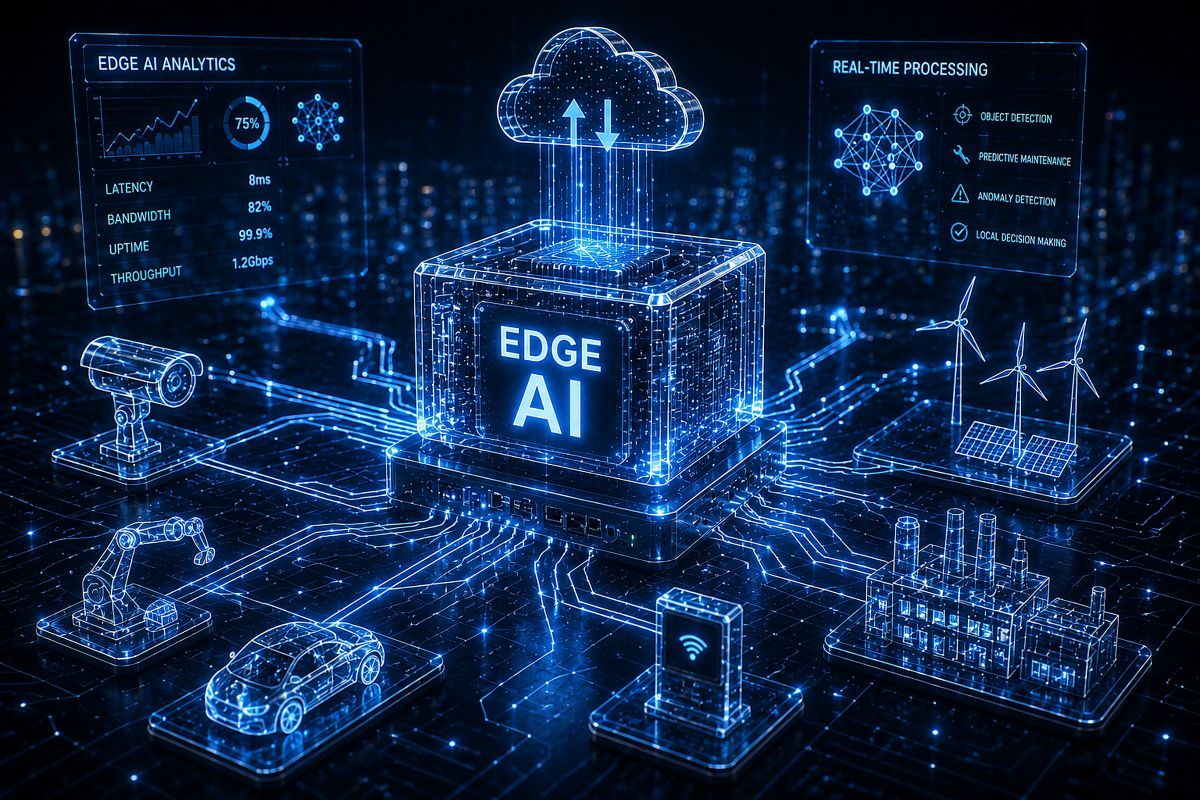
Edge AI is bringing AI computing beyond the data center and into automotive systems, industrial equipment, smart cameras, robotics, and other in-the field devices. Unlike data center systems, which offer a more stable operating environment, edge AI systems often need to operate reliably under more demanding conditions.
Automotive ADAS, industrial automation systems, and smart devices may be exposed to wide temperature fluctuations, vibration, and extended operating periods. Temperature Compensated Crystal Oscillators (TCXO) provide a more stable frequency reference for edge AI applications requiring enhanced stability. Automotive applications, in particular, may also require crystal resonators or oscillators that are automotive-grade, such as AEC-Q200, depending on the system’s needed reliability and industry qualification requirements.

Which Crystal or Oscillator Is Suitable for Low-Power AIoT Devices?
AIoT brings AI capabilities to smart cameras, wearable devices, smart home equipment, sensors, and other power-sensitive edge devices. These products are often constrained by PCB space, power consumption, and battery capacity.
For these applications, designers should prioritize:
- Low power consumption
- Compact package size
- Reliable frequency performance
Depending on the MCU, SoC, and overall system architecture, designers can consider miniature crystal resonators (XTAL) or low-power crystal oscillators.
What Type of Oscillator Is Required for AI Audio and Precision Synchronization?
AI voice recognition, speech generation, audio processing, and communication systems all rely on accurate time and frequency references. Clock drift or instability can affect sampling accuracy, data synchronization, and overall system performance.
For applications requiring higher frequency stability or precise frequency adjustment, designers can consider:
- TCXO: Provides high frequency stability for precision frequency reference applications
- VCXO: Uses voltage-controlled frequency adjustment for applications requiring frequency synchronization and fine tuning
Aker Technology Timing Solutions for AI Applications
From AI servers and high-speed data transmission to edge AI, AIoT, and precision synchronization, Aker Technology provides a comprehensive portfolio of crystal resonators and oscillators to support a wide range of AI system architectures. With multiple frequency options, oscillator technologies, package sizes, and performance specifications, Aker helps engineers identify the right frequency control solution for their AI designs.
| AI Application | Recommended Product | Recommended Frequencies |
|---|---|---|
| AI Servers & Accelerator Cards | LVPECL Differential XO | 100, 125, 156.25, 200, 312.5 MHz |
| AI Servers & Accelerator Cards | LVDS Differential XO | 100, 125, 156.25, 200, 312.5 MHz |
| AIoT | C3E / C2E / C1E | 12, 16, 20, 24, 25, 26, 27, 32, 38.4, 40, 48, 50, 54 MHz |
| AIoT | S3 / S2 / S1 | 32.768 kHz, 8, 12, 16, 20, 24, 25, 26, 27, 32, 38.4, 40, 48, 50, 54 MHz |
| AIoT | TX32 / TX22 / TX21 | 10, 16.368, 19.2, 20, 24.576, 26, 38.4 MHz |
| AI Audio & Precision Synchronization | TCXO | 12, 12.8, 16.386, 24.576, 26, 40 MHz |
| Edge AI | TCXO | 16.384, 20, 40 MHz |
Looking for Help Choosing the Right Timing Component for Your AI Design?
Contact Aker Technology to discuss your required frequency, package, stability, and application requirements. Our technical team can help you identify a suitable crystal oscillator, differential oscillator, TCXO, VCXO, or crystal resonator for your AI applications.
PIERCE ™, our virtual engineer, can also help answer your frequency control questions instantly. Ask PIERCE for product specs, recommendations based on your design requirements, order samples, and more.